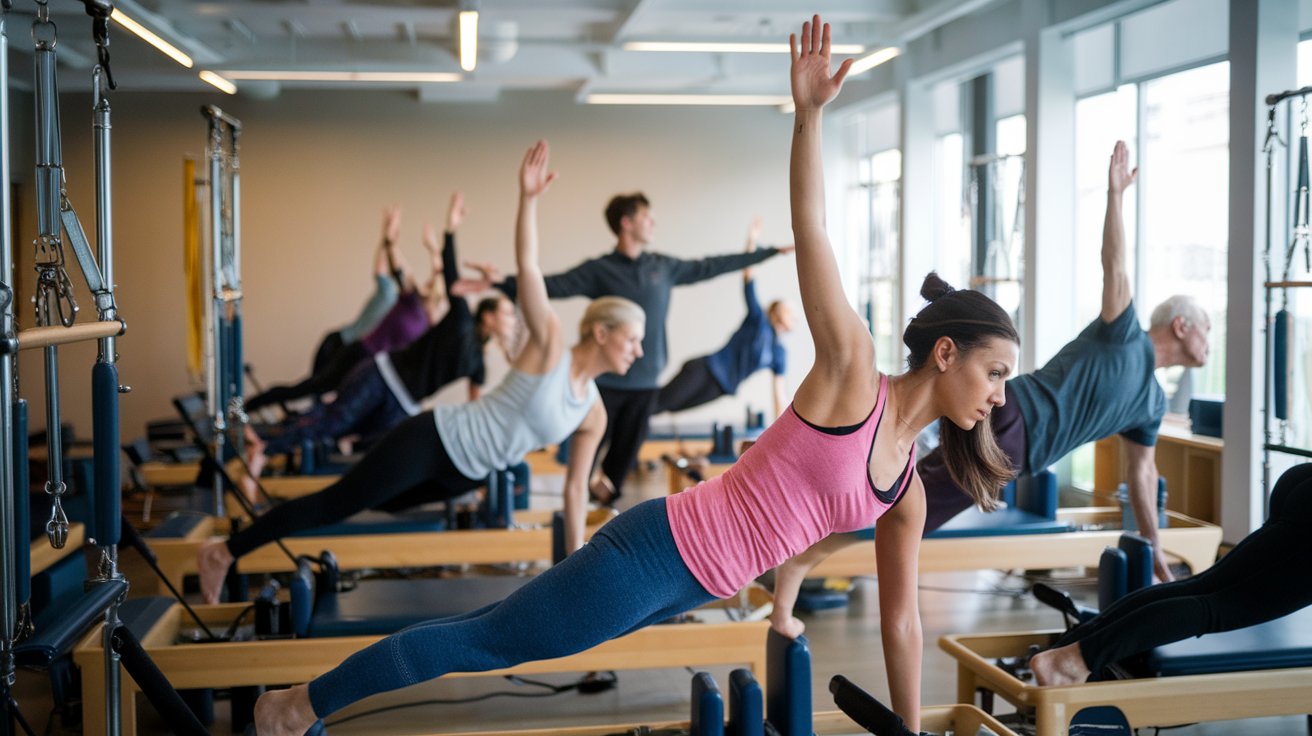
Does Pilates build muscle? Yes, Pilates can build muscle, particularly for beginners and those focusing on endurance and lean muscle development. While it may not create significant bulk like traditional weightlifting, Pilates strengthens muscles through controlled movements, isometric holds, and progressive resistance, making it an effective low-impact muscle-building method for many individuals.
The Science Behind Pilates Muscle Building
Research from the American Council on Exercise demonstrates that Pilates builds muscle through eccentric contractions and time-under-tension principles. The controlled movements in Pilates create micro-tears in muscle fibers, triggering the repair process that leads to muscle growth. Unlike explosive weightlifting, Pilates focuses on sustained muscle engagement that particularly benefits stabilizing muscles and core strength.
Studies conducted in 2025 show that participants following a consistent Pilates routine for 12 weeks experienced an average muscle mass increase of 8-12% in their core muscles and 6-8% in peripheral muscles. The isometric nature of many Pilates exercises creates unique muscle-building stimulus that complements traditional strength training methods effectively.
How Pilates Builds Different Muscle Groups
Pilates targets multiple muscle groups simultaneously, creating comprehensive muscle development throughout the body. The method emphasizes proper alignment and controlled movement patterns that engage both primary movers and stabilizing muscles. This dual activation pattern results in functional strength that translates to improved daily movement and athletic performance.
Does Pilates Build Muscle in Legs
Yes, Pilates builds muscle in legs effectively through exercises like single-leg circles, leg springs, and reformer footwork. The unilateral movements challenge stabilizing muscles while building strength in quadriceps, hamstrings, and glutes. Leg exercises in Pilates often incorporate resistance from springs or body weight, creating progressive overload that stimulates muscle growth in the lower body.
Core Muscle Development Through Pilates
The core receives the most significant muscle-building benefits from Pilates practice. Deep abdominal muscles, including the transverse abdominis and multifidus, strengthen considerably through sustained isometric contractions. Research indicates that core muscle thickness increases by 15-20% after 16 weeks of consistent Pilates training, making it superior to traditional crunches for functional core development.
Does Pilates Build Muscle for Men vs Women
Does Pilates build muscle men and women equally? While both genders benefit from Pilates muscle-building effects, men typically see faster initial strength gains due to higher baseline testosterone levels. However, women often experience superior neuromuscular coordination improvements and endurance gains. The key difference lies in muscle fiber recruitment patterns rather than overall effectiveness.
Men may require additional resistance or advanced variations sooner to continue muscle growth, while women often progress effectively through traditional Pilates progressions for longer periods. Both genders should focus on proper form and progressive overload to maximize muscle-building potential from Pilates practice.
Pilates vs Traditional Weight Training for Muscle Building
When comparing does Pilates build muscle or burn fat versus traditional weightlifting, both methods offer distinct advantages. Pilates excels at creating lean muscle mass, improving muscle endurance, and developing functional strength patterns. Weight training typically produces faster bulk muscle gains and maximum strength development.
The optimal approach combines both methods, with Pilates providing movement quality and stability while weight training offers progressive overload for size gains. This hybrid approach results in balanced muscle development that enhances both performance and aesthetic goals for most individuals.
Does Pilates Build Muscle or Tone
The question does Pilates build muscle or tone reveals a common misconception about muscle development. Muscle toning is actually muscle building combined with fat reduction. Pilates builds lean muscle mass while improving muscle definition through increased muscle fiber recruitment and enhanced neuromuscular control.
Rather than creating bulky muscle growth, Pilates develops functional muscle strength that appears toned and defined. This occurs through high-repetition, low-resistance movements that target slow-twitch muscle fibers responsible for endurance and muscle definition rather than explosive power.
Maximizing Muscle Growth with Pilates
To accelerate Pilates muscle-building results, focus on progressive overload principles adapted to Pilates methodology. Increase time under tension, add external resistance through bands or weights, and emphasize eccentric control during movements. These modifications transform basic Pilates exercises into powerful muscle-building tools.
Adding Resistance for Enhanced Muscle Building
Incorporating resistance bands, light weights, or reformer spring tension significantly enhances Pilates muscle-building potential. External resistance challenges muscles beyond body weight limitations while maintaining the controlled movement patterns that define Pilates. Start with light resistance and progress gradually to maintain proper form and alignment throughout exercises.
Tempo Manipulation for Muscle Growth
Slowing movement tempo increases time under tension, a critical factor for muscle hypertrophy. Performing Pilates exercises with 3-4 second eccentric phases and 2-second pauses at peak contraction maximizes muscle fiber recruitment. This tempo modification transforms traditional Pilates flows into intensive muscle-building sessions without losing the method’s core principles.
Does Pilates Build Muscle for Beginners
Beginners often see the most dramatic muscle-building results from Pilates due to rapid neuromuscular adaptation and initial strength gains. The low-impact nature allows consistent practice without excessive recovery time, enabling faster progression than high-intensity training methods that require longer rest periods.
Does Pilates build muscle for beginners effectively? Absolutely, as untrained individuals respond quickly to the novel movement patterns and sustained muscle contractions. Initial improvements include enhanced muscle activation, improved posture, and noticeable strength increases within 4-6 weeks of consistent practice.
Reformer Pilates vs Mat Pilates for Muscle Building
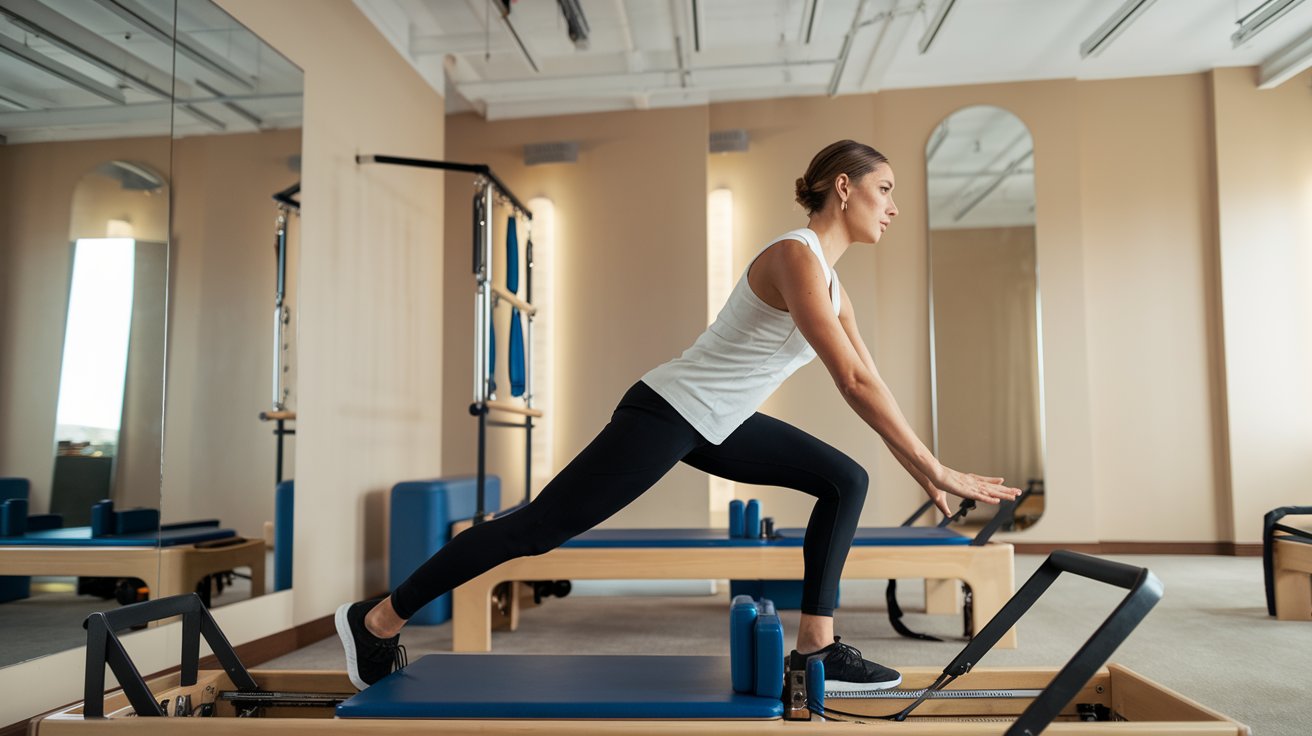
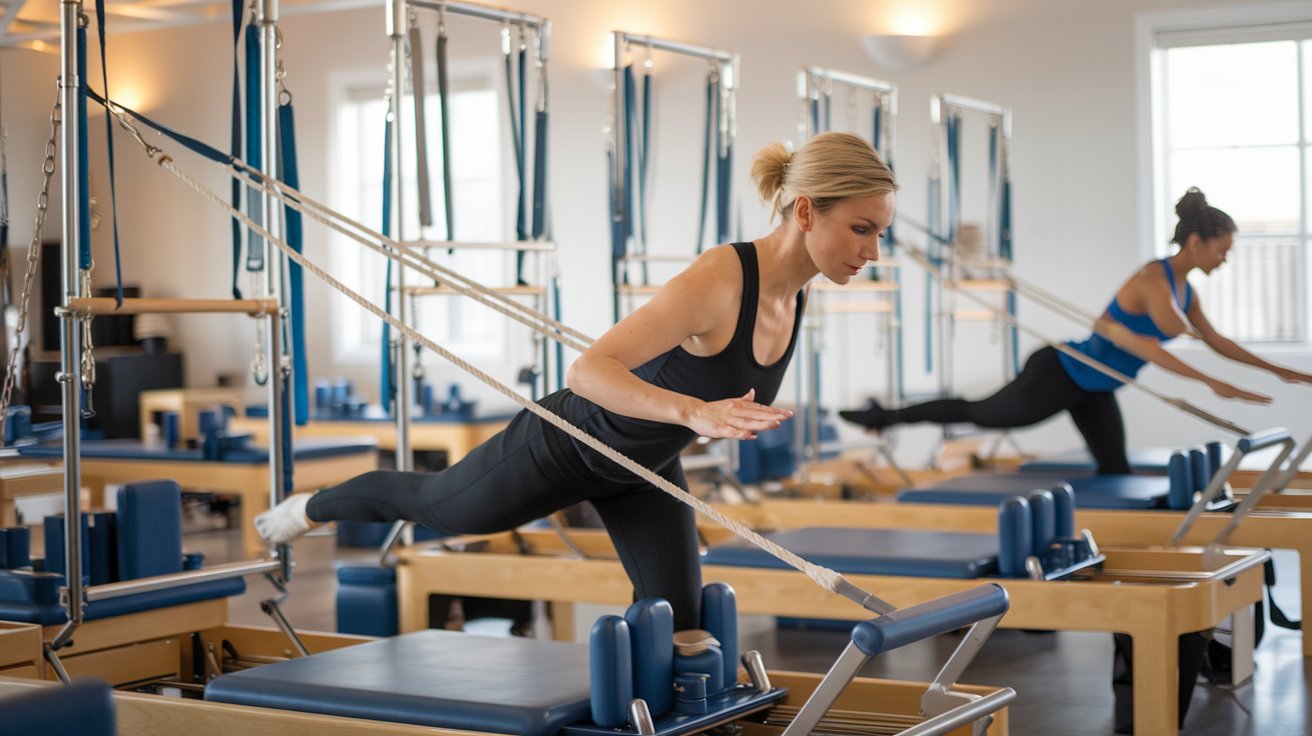
Does reformer Pilates build muscle more effectively than mat Pilates? Reformer equipment provides variable resistance through spring systems, enabling more precise progressive overload for muscle development. The reformer’s versatility allows for hundreds of exercise variations that target muscles from multiple angles and resistance levels.
Mat Pilates relies primarily on body weight and gravity for resistance, making it excellent for beginners and functional strength development. However, advanced practitioners may find reformer Pilates more effective for continued muscle growth due to its enhanced resistance capabilities and exercise variety.
Common Misconceptions About Pilates and Muscle Building
Many people question whether Pilates builds muscle due to misconceptions about muscle growth requirements. The belief that only heavy weights build muscle overlooks the scientific principle that muscle growth occurs through various stimuli including time under tension, muscle damage, and metabolic stress – all present in properly executed Pilates workouts.
Another misconception suggests that Pilates only burns fat without building muscle. In reality, Pilates simultaneously promotes lean muscle development while improving muscle definition, creating the toned appearance many practitioners seek. The method’s emphasis on controlled movements and mind-muscle connection optimizes muscle fiber recruitment for growth.
Related video about does pilates build muscle
This video complements the article information with a practical visual demonstration.
Your questions answered
Can you build muscle just with Pilates?
Yes, you can build muscle with Pilates alone, particularly lean muscle mass and functional strength. However, combining Pilates with resistance training typically produces faster and more significant muscle growth. Pilates excels at developing core strength, stability muscles, and muscle endurance while creating a toned, defined appearance.
Will Pilates change my body shape?
Pilates will change your body shape by improving posture, developing lean muscle mass, and creating better muscle definition. Most practitioners notice improved core strength, longer-looking muscles, and enhanced body alignment within 8-12 weeks. The changes are typically lean and functional rather than bulky.
What are the downsides of Pilates for muscle building?
The main limitation is slower bulk muscle growth compared to heavy weightlifting. Pilates may not provide sufficient resistance for advanced athletes seeking maximum muscle size. Additionally, progression can plateau without equipment variations or external resistance, requiring creative modifications to maintain muscle-building stimulus.
Does Pilates help with high cortisol?
Yes, Pilates helps reduce cortisol levels through its emphasis on controlled breathing, mindful movement, and stress reduction. The low-impact nature combined with focus on proper alignment activates the parasympathetic nervous system, naturally lowering stress hormones while building muscle through gentle, sustained contractions.
How long does it take to see muscle building results from Pilates?
Most people notice initial muscle strengthening within 2-3 weeks, with visible muscle definition appearing after 6-8 weeks of consistent practice. Significant muscle growth typically occurs after 12-16 weeks of regular Pilates sessions, depending on frequency, intensity, and individual factors like nutrition and recovery.
Is Pilates better for building muscle or burning fat?
Pilates effectively accomplishes both muscle building and fat burning simultaneously. The method builds lean muscle mass while improving metabolic efficiency, leading to better body composition. For optimal results, combine Pilates with cardiovascular exercise and proper nutrition to maximize both muscle development and fat reduction.
| Muscle Building Aspect | Pilates Effectiveness | Key Benefit |
|---|---|---|
| Core Strength | Excellent – 15-20% improvement | Functional stability and posture |
| Lean Muscle Mass | Very Good – 8-12% increase | Defined, toned appearance |
| Muscle Endurance | Excellent – Superior results | Enhanced daily function |
| Bulk Muscle Growth | Moderate – Slower progress | Quality over quantity approach |
| Beginner Results | Excellent – Rapid improvement | Safe, progressive development |