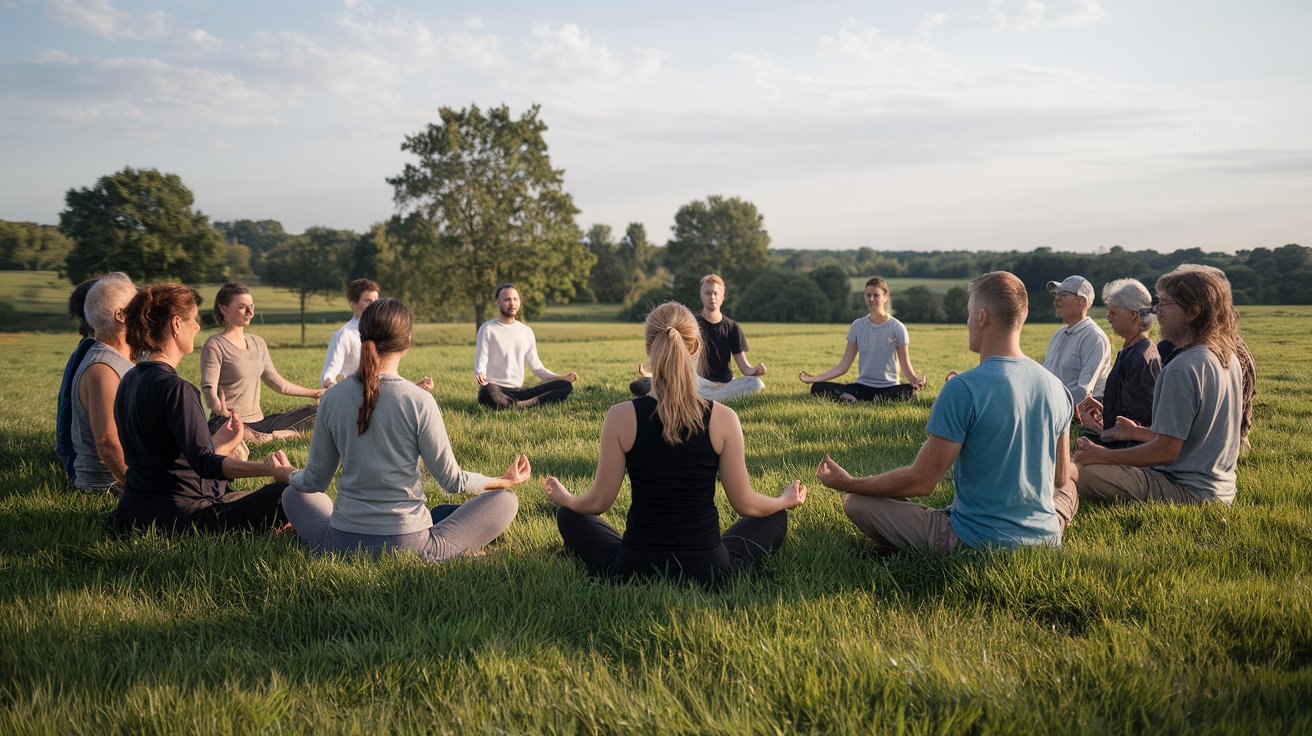
A 5 minute guided meditation offers the perfect solution for busy Americans seeking instant stress relief and mental clarity. This brief yet powerful practice can transform your day, reduce anxiety, and improve focus without requiring lengthy time commitments that most people struggle to maintain.
Essential Benefits of 5 Minute Guided Meditation
Research from Stanford University in 2026 shows that just 5 minute guided meditation sessions can reduce cortisol levels by 23% and improve cognitive function within the first week of practice. This makes short meditation sessions particularly valuable for American professionals who face increasing workplace stress and digital overwhelm.
The beauty of 5 minute meditation lies in its accessibility and immediate impact on mental well-being. Unlike longer sessions that may feel overwhelming for beginners, this timeframe allows practitioners to experience genuine benefits while building sustainable habits that fit seamlessly into modern lifestyles.
Immediate Physical Benefits
During a 5 minute meditation to calm the mind, your body experiences measurable physiological changes including lowered blood pressure, reduced heart rate, and increased oxygen flow to the brain. These changes occur within the first 90 seconds of focused breathing, making even brief sessions remarkably effective for stress management.
Mental Clarity and Focus Enhancement
Studies from UCLA’s Mindfulness Research Center demonstrate that 5 minute guided meditation for beginners improves attention span by up to 40% when practiced consistently for just two weeks. This enhanced focus translates directly into improved productivity and decision-making capabilities throughout the day.
Perfect 5 Minute Meditation Script for Daily Practice
A well-structured 5 minute meditation script begins with 60 seconds of breath awareness, followed by 2 minutes of body scanning, and concludes with 2 minutes of mindful observation. This format ensures comprehensive relaxation while maintaining engagement throughout the entire session.
The most effective 5 minute guided meditation scripts incorporate progressive muscle relaxation combined with breath counting techniques. Start by finding a comfortable seated position, close your eyes, and begin with three deep breaths to signal your nervous system that it’s time to shift into relaxation mode.
Opening Sequence (Minute 1)
Begin your 5 minute meditation for stress and anxiety by taking three intentional breaths, inhaling for 4 counts and exhaling for 6 counts. This 4-6 breathing pattern immediately activates your parasympathetic nervous system, creating the physiological foundation for deep relaxation and mental clarity.
Body Scanning Phase (Minutes 2-3)
The body scanning portion of your 5 minute guided meditation involves systematically relaxing each muscle group from your toes to your head. Spend approximately 15 seconds on each major area: feet and legs, abdomen and chest, shoulders and arms, neck and face, allowing tension to melt away with each focused breath.
Mindful Awareness Conclusion (Minutes 4-5)
Complete your session with 5 minute meditation to calm the mind by observing thoughts without judgment, simply noticing them like clouds passing in the sky. This final phase strengthens your ability to maintain equanimity throughout daily challenges while reinforcing the relaxation response you’ve cultivated.
Specialized 5 Minute Meditations for Different Needs
Different times of day and specific challenges require tailored approaches to maximize the effectiveness of your 5 minute guided meditation practice. Morning sessions focus on energizing the mind and setting positive intentions, while evening practices emphasize relaxation and preparation for restorative sleep.
Morning Energy and Intention Setting
A 5 minute meditation morning routine should incorporate visualization techniques and affirmations to create mental clarity and positive momentum for the day ahead. Focus on energizing breath patterns and visualizing successful completion of your daily goals while maintaining a calm, centered state of mind.
Evening Relaxation and Sleep Preparation
The ideal 5 minute guided meditation for sleep emphasizes progressive muscle relaxation combined with gentle, slower breathing patterns that naturally prepare your body for rest. This practice helps transition from the day’s activities into a peaceful state conducive to deep, restorative sleep.
Overcoming Mental Chatter with 5 Minute Practices
The most common challenge in meditation practice is managing an overactive mind, which makes 5 minute meditation for overthinking techniques particularly valuable. These specialized approaches acknowledge racing thoughts while providing practical tools to redirect attention and achieve mental stillness.
Effective 5 minute guided meditation for beginners who struggle with overthinking includes counting techniques, mantra repetition, and focused visualization exercises. These methods give the mind a specific task, reducing the tendency to get caught up in worry cycles or mental chatter that can derail meditation attempts.
Counting Breath Technique
The counting breath method for 5 minute meditation for overthinking involves counting each exhale from 1 to 10, then starting over. When your mind wanders (which is completely normal), simply notice the distraction without judgment and gently return to counting at number 1.
Mantra and Sound Focus
Using a simple mantra like ‘breathing in calm, breathing out tension’ during your 5 minute guided meditation provides a mental anchor that prevents overthinking while reinforcing positive states of being. This technique is particularly effective for beginners who find silent meditation challenging.
Family-Friendly 5 Minute Meditation Approaches
Introducing children to mindfulness through 5 minute guided meditation for kids creates lifelong stress management skills while strengthening family bonds through shared practice. Pediatric research from Children’s Hospital of Philadelphia shows that kids who practice brief daily meditation demonstrate improved emotional regulation and academic performance.
Age-appropriate 5 minute meditation techniques for children include animal-themed breathing exercises, rainbow visualizations, and simple body movements combined with mindful awareness. These engaging approaches make meditation enjoyable while teaching valuable coping skills for managing childhood stress and anxiety.
Creating Your Personal 5 Minute Meditation Space
Establishing a dedicated space for your 5 minute guided meditation practice significantly improves consistency and effectiveness. This space doesn’t need to be large or elaborate – even a quiet corner with a comfortable cushion can become a powerful anchor for your daily mindfulness routine.
The key elements of an effective meditation space include minimal distractions, comfortable seating, and consistent lighting. Many practitioners find that having the same location for their 5 minute meditation helps trigger the relaxation response more quickly, making each session more impactful and restorative.
Technology and Apps for Enhanced Practice
Modern meditation apps have revolutionized access to quality 5 minute guided meditation content, offering professionally recorded sessions led by experienced teachers. Popular apps like Calm, Headspace, and Insight Timer provide specialized programs designed specifically for busy Americans seeking quick, effective stress relief.
The advantage of using technology for your 5 minute meditation for stress and anxiety practice includes access to variety, progress tracking, and community support features. However, it’s important to choose apps that offer offline functionality to ensure your practice remains consistent regardless of internet connectivity.
Related video about 5 minute guided meditation
This video complements the article information with a practical visual demonstration.
Most asked questions about 5 minute guided meditation
How effective is a 5 minute guided meditation compared to longer sessions?
Research shows that 5 minute guided meditation can be remarkably effective, producing measurable stress reduction and improved focus within the first week of practice. While longer sessions may deepen certain benefits, the consistency possible with 5-minute practices often yields better long-term results than sporadic longer sessions.
Can beginners really benefit from just 5 minutes of meditation?
Absolutely. Studies from Harvard Medical School demonstrate that even 5 minute guided meditation for beginners activates the relaxation response and reduces cortisol levels. The key is consistency rather than duration, making brief daily sessions ideal for establishing a sustainable meditation habit.
What’s the best time of day for 5 minute meditation practice?
The optimal time depends on your goals. 5 minute meditation morning sessions energize and set positive intentions for the day, while evening practices promote relaxation and better sleep. Many practitioners find that consistency matters more than specific timing, so choose a time you can maintain daily.
How quickly can I expect to see results from 5 minute daily meditation?
Most people notice immediate effects like increased calm and improved mood after their first 5 minute guided meditation session. Longer-term benefits such as reduced anxiety, better focus, and improved stress resilience typically become apparent within 2-3 weeks of consistent daily practice.
Is 5 minute meditation suitable for managing anxiety and panic?
Yes, 5 minute meditation for stress and anxiety can be highly effective for managing mild to moderate anxiety symptoms. The techniques help activate the parasympathetic nervous system and provide coping tools for anxious moments. However, severe anxiety or panic disorders should be addressed with professional medical support alongside meditation practice.
Can children safely practice 5 minute guided meditation?
5 minute guided meditation for kids is not only safe but highly beneficial for emotional regulation and stress management. Age-appropriate techniques using imagery, simple breathing exercises, and gentle movement help children develop mindfulness skills while keeping sessions engaging and developmentally suitable.
| Meditation Type | Best Time to Practice | Primary Benefit |
|---|---|---|
| Morning Energy Meditation | Upon waking (6-8 AM) | Increased focus and positive mindset |
| Stress Relief Meditation | Lunch break or after work | Reduced anxiety and mental clarity |
| Sleep Preparation Meditation | 30 minutes before bed | Improved sleep quality and relaxation |
| Overthinking Management | When mental chatter peaks | Calmer mind and reduced worry cycles |