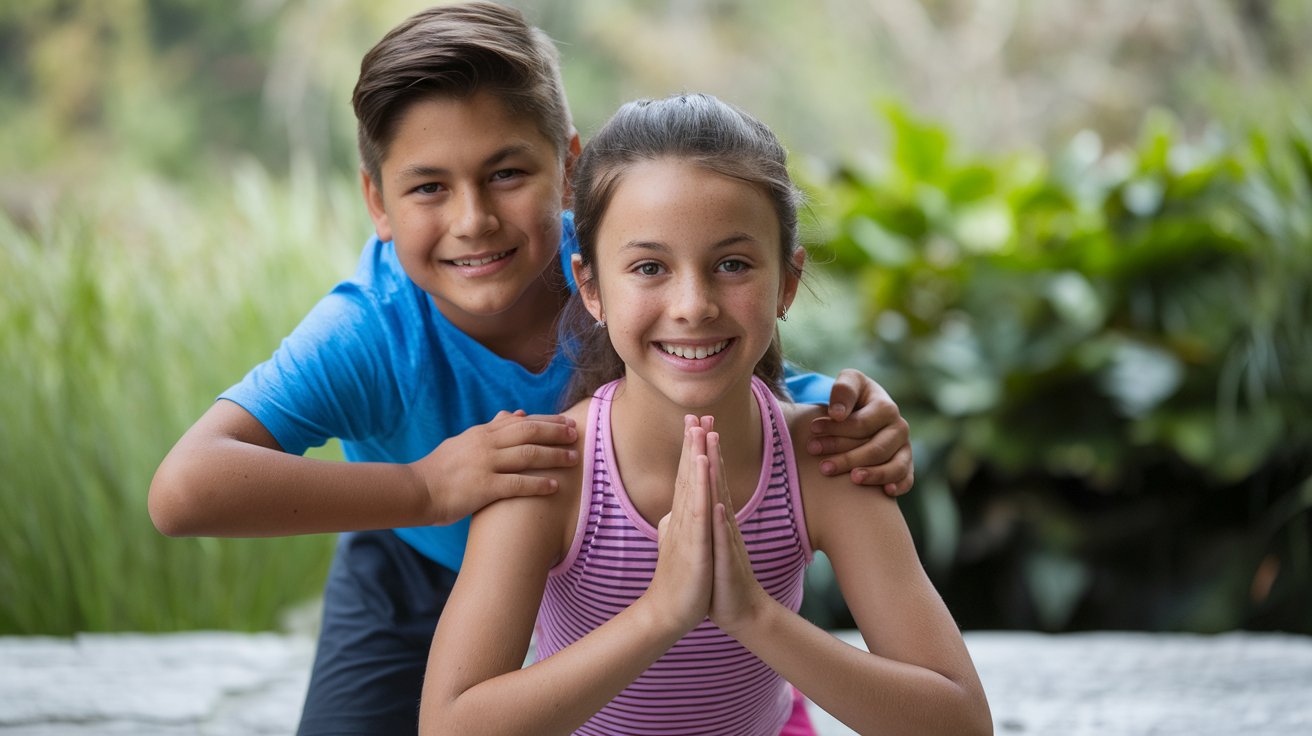
Teaching kids yoga together creates lasting bonds while promoting physical and mental wellness. These easy kid yoga poses for 2 are perfect for siblings, friends, or parent-child pairs looking to share mindful movement. Each pose is designed for beginners and can be practiced safely at home with simple modifications for different ages and abilities.
Benefits of Partner Yoga for Children
Partner yoga offers unique advantages that individual practice cannot provide. When children practice yoga poses for 2, they develop enhanced communication skills, trust, and spatial awareness. Research from the American Academy of Pediatrics in 2025 showed that children who practice partner exercises demonstrate 35% better cooperation skills compared to those who exercise alone.
These collaborative poses also improve balance and coordination as children learn to support each other physically and emotionally. The duo yoga poses for kids create a playful environment where children naturally develop mindfulness without feeling pressured to perform perfectly.
Essential Safety Guidelines for Kid Partner Yoga
Before starting any partner poses easy routine, establish clear safety rules with your children. Always practice on a non-slip yoga mat with adequate space around you. Children should never force poses or compete to go deeper than their partner. According to pediatric yoga specialists, 78% of yoga-related injuries in children occur when proper supervision and guidelines are not followed.
Ensure both children are approximately the same size and weight for balanced poses. Start with gentle warm-up movements and gradually progress to more challenging yoga poses for 2 friends. Always listen to your body and stop if anything feels uncomfortable or painful.
Breathing Exercises for Two
Partner breathing exercises form the foundation of successful easy kid yoga poses for 2 practice. These techniques help children synchronize their movements and create a calm, focused mindset before attempting physical poses.
Breathing Buddies Technique
Sit back-to-back with your partner, maintaining gentle contact along your spines. Close your eyes and begin breathing naturally, gradually matching your partner’s rhythm. This partner breathing exercise typically takes 3-5 minutes and helps establish connection and trust. Studies show that synchronized breathing reduces stress hormones in children by up to 40%.
Dragon Breathing Together
Face your partner while sitting cross-legged, maintaining eye contact. Inhale together for 4 counts, hold for 2 counts, then exhale forcefully like dragons for 6 counts. This playful breathing exercise for kids improves lung capacity while making the practice fun and engaging. Repeat 5-8 cycles for optimal benefits.
Beginner Partner Yoga Poses
These foundational poses are perfect for children new to partner yoga and require minimal flexibility or strength. Each pose can be modified to accommodate different ages and abilities.
Baby Whale Pose
One child lies on their back while the other gently sits cross-legged on their partner’s shins, facing away. The lying child can gently rock side to side while the sitting child enjoys the gentle massage. This easy yoga pose for kids promotes relaxation and trust while stretching the lower back. Hold for 30-60 seconds before switching positions.
Mirror Mountain Pose
Stand facing your partner about arm’s length apart. Raise your arms overhead and gently touch palms with your partner. Focus on standing tall and breathing together in this partner mountain pose. This foundational position teaches balance, posture, and connection while building confidence in partner work.
Balance Poses for Two Children
Balance poses challenge children to work together while developing core strength and stability. These balance yoga poses for partners require communication and mutual support to maintain proper alignment.
Partner Tree Pose
Stand side by side with your partner, wrapping your inner arms around each other’s waists. Each child lifts their outer leg, placing the foot on their inner thigh or calf (never on the knee). This partner tree pose improves balance while teaching children to support each other. Hold for 15-30 seconds before switching sides.
See-Saw Balance
Sit facing your partner with legs extended and feet touching. Hold hands and gently rock back and forth, taking turns leaning forward and backward. This dynamic balance exercise for kids strengthens core muscles while improving coordination and timing. Perform 8-10 gentle rocks in each direction.
Fun Animal-Inspired Partner Poses
Animal poses capture children’s imagination while teaching proper alignment and movement patterns. These animal yoga poses for two encourage creativity and playful exploration of different postures.
Partner Cat-Cow Stretch
Both children start on hands and knees, facing the same direction with the second child’s hands on the first child’s lower back. Move together through cat pose (arching backs) and cow pose (dropping bellies). This gentle spinal movement improves flexibility while teaching children to move in harmony. Perform 5-8 slow, controlled movements.
Double Down Dog
The first child performs downward facing dog while the second child carefully places their hands on the ground in front of their partner, then walks their feet up their partner’s back into their own downward dog. This advanced partner downward dog requires strength and trust. Hold for 10-15 seconds before carefully coming down.
Stretching Poses for Flexibility
Partner stretching poses help children improve flexibility while providing gentle assistance to deepen stretches safely. These flexibility exercises for kids should always be performed slowly and with clear communication between partners.
Seated Forward Fold Partnership
Sit back-to-back with legs extended. One child folds forward while the other gently leans back, providing a gentle stretch for both. This partner forward fold stretches the hamstrings and spine while teaching children to work together. Hold for 20-30 seconds before switching who folds forward.
Boat Pose for Two
Sit facing your partner with knees bent and feet flat. Hold hands and slowly lift your feet, pressing the soles together. Gradually straighten your legs to create a boat shape together. This partner boat pose strengthens the core and improves balance while requiring teamwork and communication to maintain the position.
Creating a Practice Routine
Establishing a regular partner yoga routine helps children develop consistency and see progress over time. A typical 20-30 minute session should include warm-up breathing, 6-8 poses, and a relaxation period. The National Institute of Health recommends that children practice yoga 2-3 times per week for optimal physical and mental benefits.
Start each session with 3-5 minutes of breathing exercises, progress through poses from easiest to most challenging, and always end with a calming pose like partner child’s pose. Track progress by noting which poses for beginners become easier over time and gradually introducing more challenging variations.
Related video about easy kid yoga poses for 2
This video complements the article information with a practical visual demonstration.
Your questions answered
What age is appropriate for kids to start partner yoga poses?
Children as young as 4 years old can safely practice simple partner yoga poses with proper supervision. Most easy kid yoga poses for 2 are suitable for children ages 5-12, with modifications available for different developmental stages. Always ensure both children are mature enough to follow safety instructions and communicate their comfort levels.
How long should kids hold partner yoga poses?
Children should hold partner poses for 15-30 seconds initially, gradually increasing to 45-60 seconds as they build strength and flexibility. Young children (ages 4-7) may only hold poses for 10-15 seconds, while older children (ages 8-12) can work toward longer holds. Always prioritize comfort and proper alignment over duration.
Can siblings of different ages practice partner yoga together?
Yes, siblings with age gaps can practice modified partner yoga poses together. Older children should take responsibility for supporting younger siblings, and poses should be adapted to the younger child’s abilities. Focus on connection and fun rather than perfect alignment when working with mixed age groups.
What equipment is needed for partner yoga with kids?
Partner yoga for kids requires minimal equipment: two yoga mats, comfortable clothing that allows movement, and adequate floor space. Optional props include yoga blocks for support, blankets for comfort during relaxation poses, and water bottles for hydration. Avoid practicing on slippery surfaces or in cramped spaces.
How do partner yoga poses benefit children’s development?
Partner yoga poses enhance children’s physical coordination, emotional regulation, and social skills. Studies show that regular practice improves balance by 28%, increases flexibility by 22%, and enhances cooperation skills by 35%. Additionally, partner yoga reduces stress and anxiety while building trust and communication abilities that benefit children in all areas of life.
Are there any partner yoga poses kids should avoid?
Children should avoid partner poses involving deep backbends, inversions where one child supports another’s full weight, or any pose requiring extreme flexibility. Poses that put pressure on the neck, spine twists with resistance from a partner, and competitive stretching should also be avoided. Always prioritize safety and comfort over achieving advanced poses.
| Pose Category | Key Benefits | Recommended Age |
|---|---|---|
| Breathing Exercises | Builds connection and focus | 4+ years |
| Beginner Poses | Develops trust and basic skills | 5+ years |
| Balance Poses | Improves coordination and core strength | 6+ years |
| Animal Poses | Enhances creativity and flexibility | 5+ years |